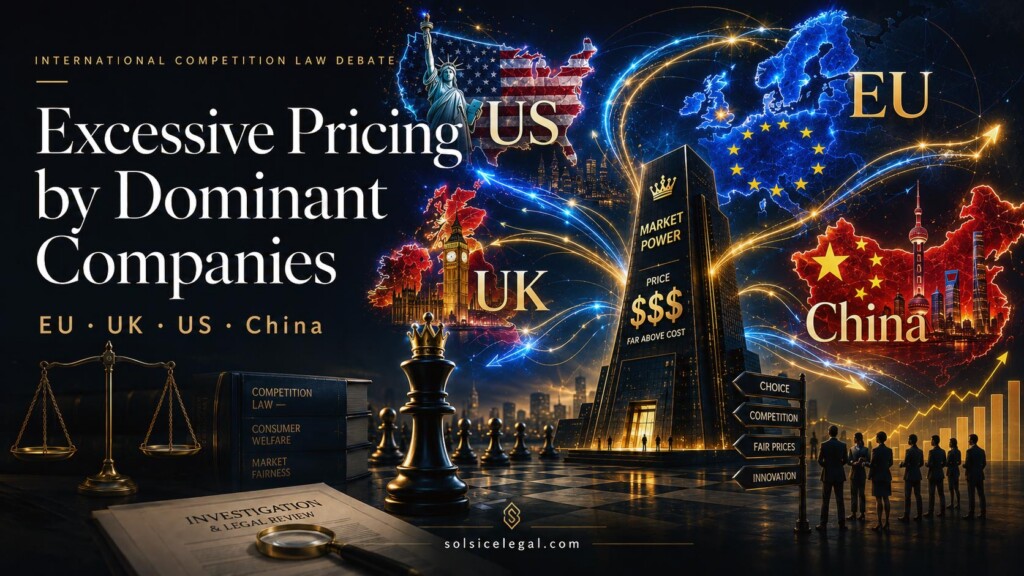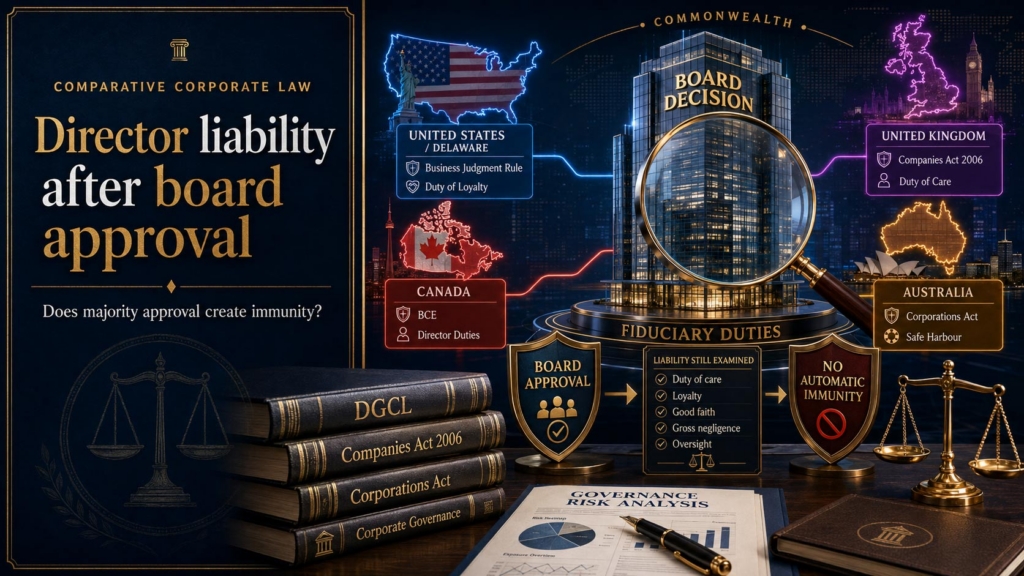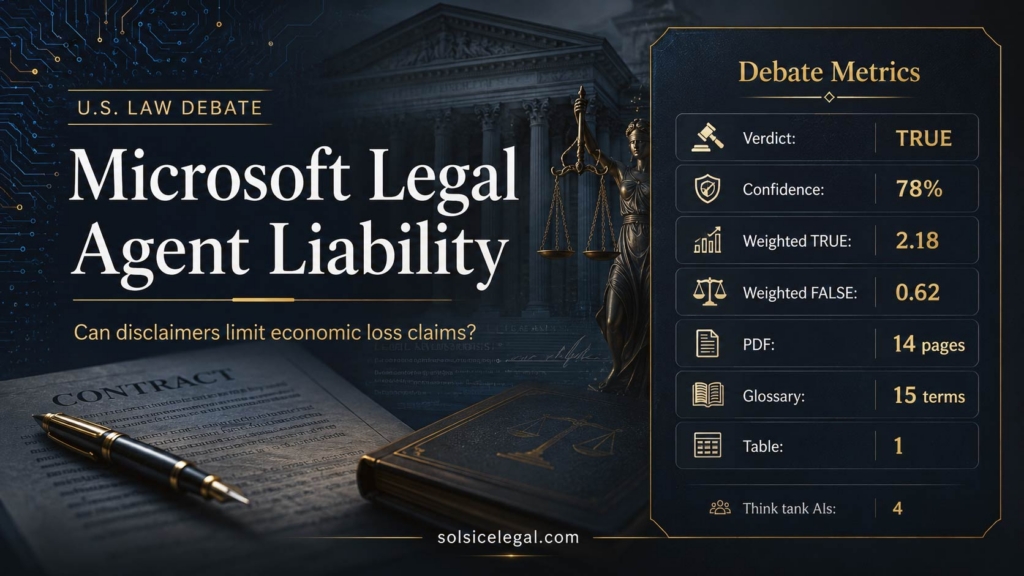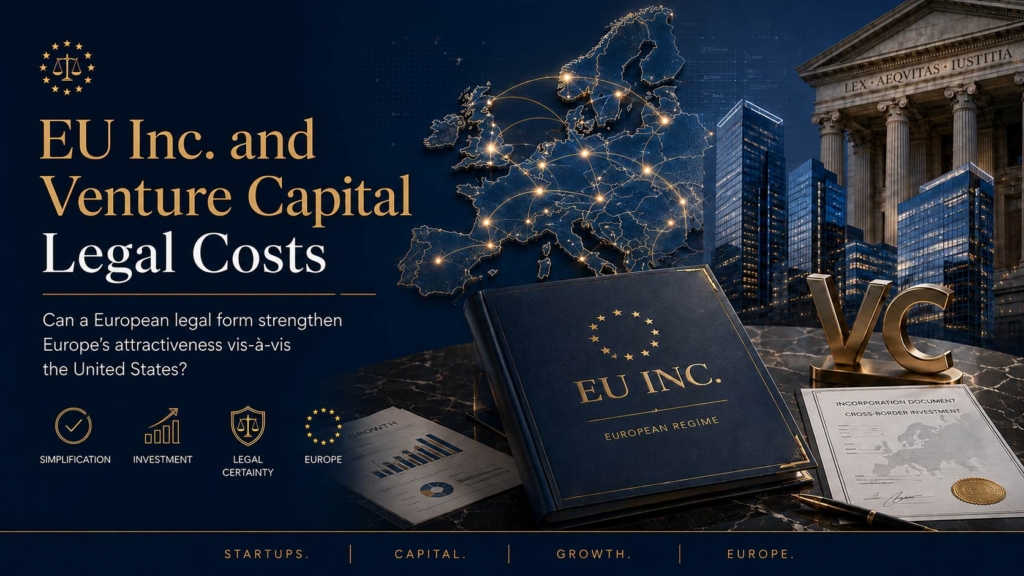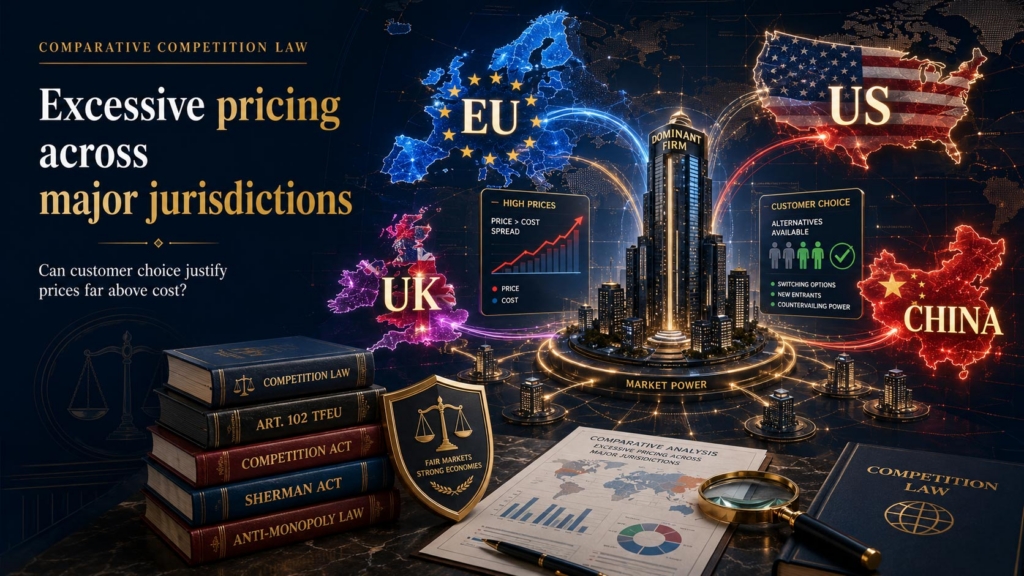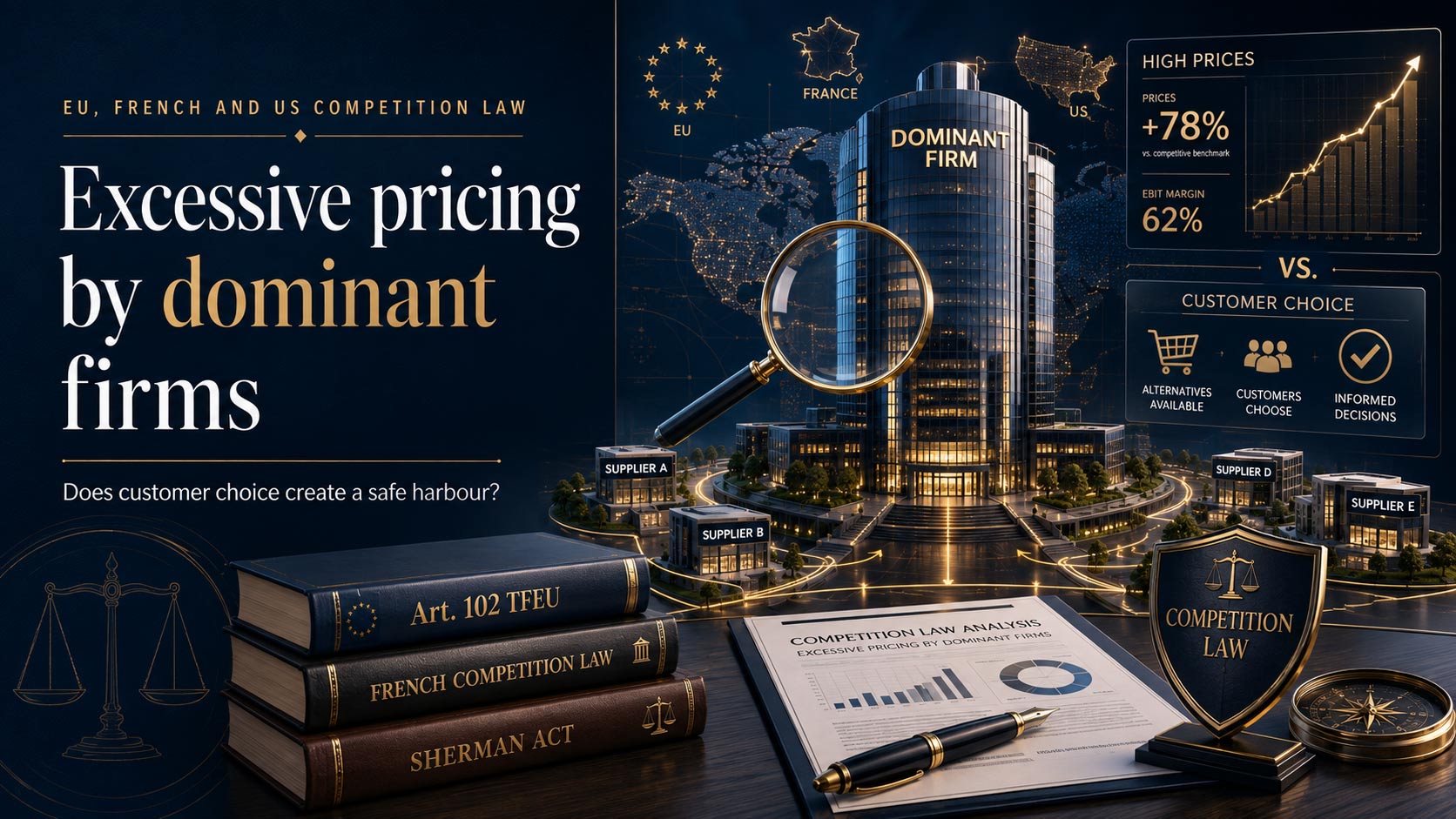
EU, French and US competition law. Excessive pricing by dominant firms raises a fundamental divide between commercial pricing freedom and exploitative-abuse control. The debate asks whether genuine customer choice can protect very high margins from competition-law scrutiny.
It also exposes a significant divergence between European and US approaches.
Check the analysis, the sources, the verdict and concept training
The Thesis
“A dominant company , in EU or not, may lawfully charge prices far above its costs whenever customers remain free to purchase from another supplier .”
Legal Texts, Case Law, and Concepts Relied Upon
The report principally relies on Article 102(a) TFEU, United Brands v Commission (Case 27/76) and AKKA/LAA (Case C-177/16). United Brands supplies the foundational concept of dominance and the relationship between excessive prices and economic value, while AKKA/LAA develops the assessment of potentially unfair prices and comparative benchmarks. The report also discusses the Commission’s Scandlines Sverige AB v Port of Helsingborg excessive-pricing decision.
French law is represented principally by Article L.420-2 of the French Commercial Code, which prohibits abusive exploitation of a dominant position. The comparative analysis contrasts this European framework with Section 2 of the Sherman Act and the US approach to monopoly pricing: FTC guidance expressly distinguishes high prices from unlawful acquisition or maintenance of monopoly power through unreasonable methods. Key concepts include exploitative abuse, economic value, price-cost disparity, dominance, effective competitive constraint and customer switching.
The most revealing aspect is how the TRUE and FALSE sides used these authorities to defend or challenge the proposition.
Example of Data Tables Available in the PDF
The PDF contains a Per-Debate Winner Matrix comparing the competing models, average scores, token counts, winners, verdicts and confidence levels across the two confrontations.
Current or Practical Context
For internationally active businesses, the practical issue is jurisdictional. EU competition law expressly permits scrutiny of unfair pricing by dominant undertakings, French law separately prohibits abuse of dominance, whereas US antitrust does not generally treat high monopoly pricing alone as unlawful. The same pricing strategy can therefore require materially different legal analysis across markets.
Check this debate for an example with a financial perspective : https://customers.solsice.com/is-ai-creating-a-structural-repricing-of-memory-and-storage/
Summary
| Description | Details |
|---|---|
| Original report | https://solsicelegal.com/public/debates/a-dominant-company-in-eu-or-not-may-lawfully-charge-prices-f-c2430615c7f3 |
| 26 pages | |
| Language | English |
| Scores | Weighted TRUE 0.00 / FALSE 1.82; verdict FALSE; confidence 100% |
| Think tank AIs | openai/gpt-5.6-luna-pro; moonshotai/kimi-k2.5; accounts/fireworks/models/kimi-k2p6 |
| Clerk-arbitrator | tencent/hy3 |
| Data | Glossary terms: [premium licence only]; tables: 1 — Per-Debate Winner Matrix covering models, scores, tokens, winner, verdict and confidence. |
| Quiz language | English |
Read the debates, check the sources, understand the verdict, and take the test