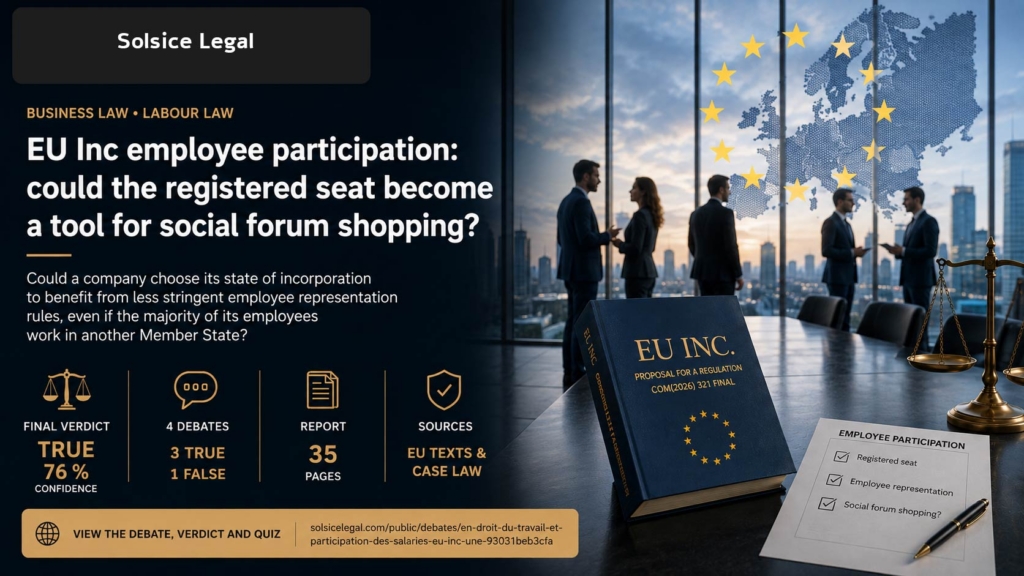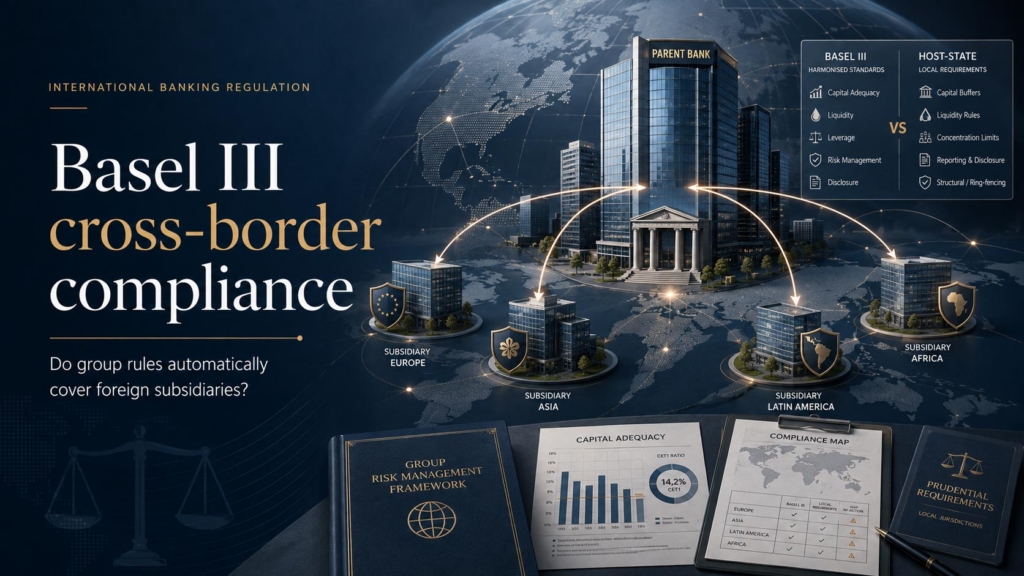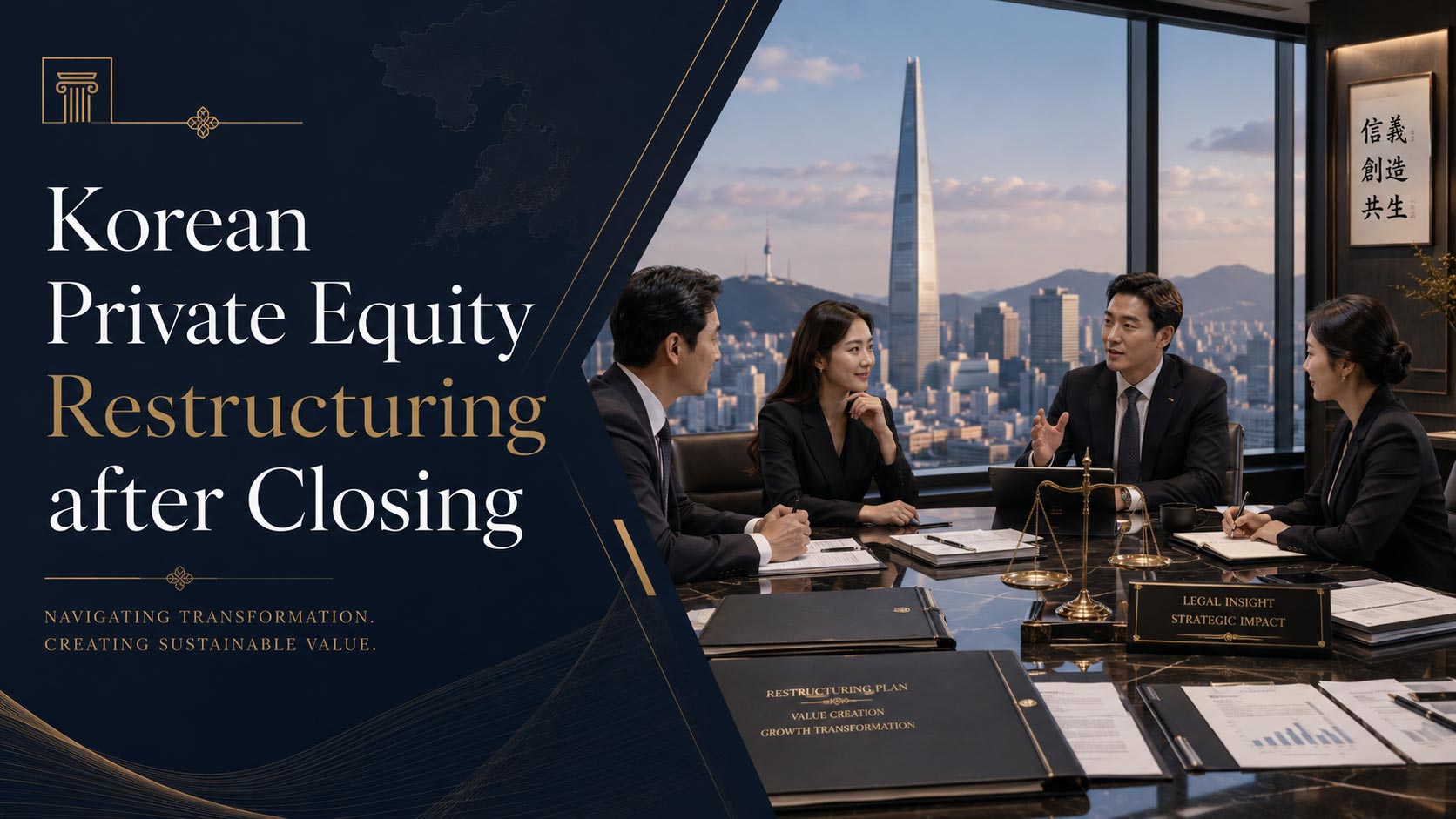
Korean private equity restructuring requires more than examining the acquisition agreement. The debate tests the tension between post-closing corporate control and the mandatory rules governing dismissals, transfers, relocations, directors and creditors.
Read the debates, check the sources, understand the verdict, and take the test
https://solsicelegal.com/public/debates/private-equity-fund-closing-09531eecb04a
The Thesis
The original thesis was :
대한민국 회사법에 따르면, 사모펀드(Private Equity Fund)가 대한민국 회사를 인수한 경우, 인수계약서에 별도의 제한 조항이 없다면 인수 완료(Closing) 이후 집단해고, 사업 이전 또는 해외 이전을 포함한 기업 구조조정을 추가적인 법적 제한 없이 자유롭게 실시할 수 있다. 참인가, 거짓인가?
Which means :
Under South Korean company law, where a private equity fund acquires a South Korean company, it may, after completion of the acquisition, freely implement corporate restructuring — including collective redundancies, a transfer of the business or an overseas relocation — without any additional legal restrictions, provided that the acquisition agreement contains no specific restrictive provisions. True or False?
Legal Texts, Case Law, and Concepts Relied Upon
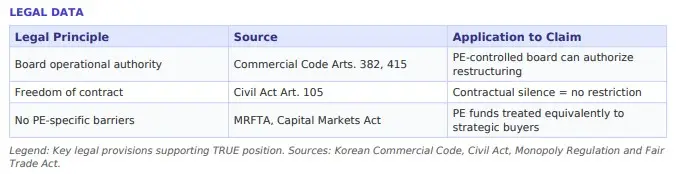
The report principally examines the Korean Commercial Act, including Articles 382, 382-3, 383, 399, 401-2 and 415; Article 24 of the Labor Standards Act; Articles 105 and 406 of the Civil Act; the Monopoly Regulation and Fair Trade Act; and the Capital Markets Act. These authorities address board powers, fiduciary and shadow-director liability, collective dismissals, contractual freedom, creditor protection and merger-control remedies.
The judicial authorities include Supreme Court Decision 2012Da220432, Constitutional Court Decision 2007Hun-Ka14, Supreme Court Decision 2015Da237890, and Supreme Court doctrine concerning employment continuity following a going-concern business transfer. The central concepts are mandatory law, board authority, managerial prerogative, collective dismissal, freedom of contract, fiduciary duties, business transfer and post-closing restructuring.
The most revealing aspect is how the TRUE and FALSE sides used these authorities to defend or challenge the proposition.
Example of Data Tables Available in the PDF
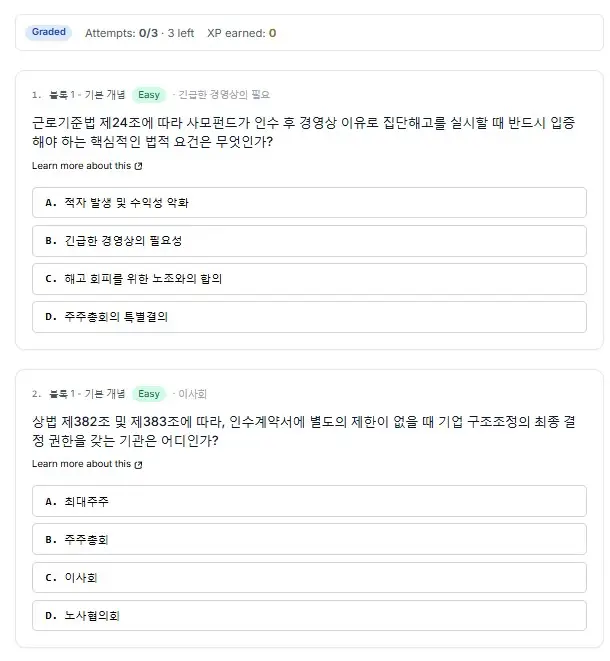
Note that Solsice Legal Online version only include languages with latin alphabet. That'(s why a quetsion in another language such as Korean or Arabic will prodce a PDF in English. Non latin alphabet (RTL) are only available optionnally for private deployment of the application.
However, the MCQ is in the language of the question (for demonstration purposes only).
Current or Practical Context
In a Korean private equity acquisition, closing may transfer shareholder control and permit the new board to pursue operational changes, but transaction planning must also account for employment procedures, fiduciary exposure, regulatory review, creditor remedies and the legal character of any business transfer or overseas relocation.
Summary
| Description | Details |
|---|---|
| Original report | https://solsicelegal.com/public/debates/private-equity-fund-closing-09531eecb04a |
| 25 pages | |
| Language | English (RTL languages are not available in the public version of Solsice Legal) |
| Scores | Weighted TRUE: 0.00; weighted FALSE: 1.83; verdict: FALSE; confidence: 98% |
| Think tank AIs | z-ai/glm-5; openai/gpt-5.4-mini; anthropic/claude-opus-4.8 |
| Clerk-arbitrator | deepseek/deepseek-v4-flash |
| Data | 25 glossary terms; 9 tables covering debate results and the principal labour, corporate, contractual, competition and creditor authorities |
| Quiz language | Korean |
Read the debates, check the sources, understand the verdict, and take the test
https://solsicelegal.com/public/debates/private-equity-fund-closing-09531eecb04a