02/08/2026
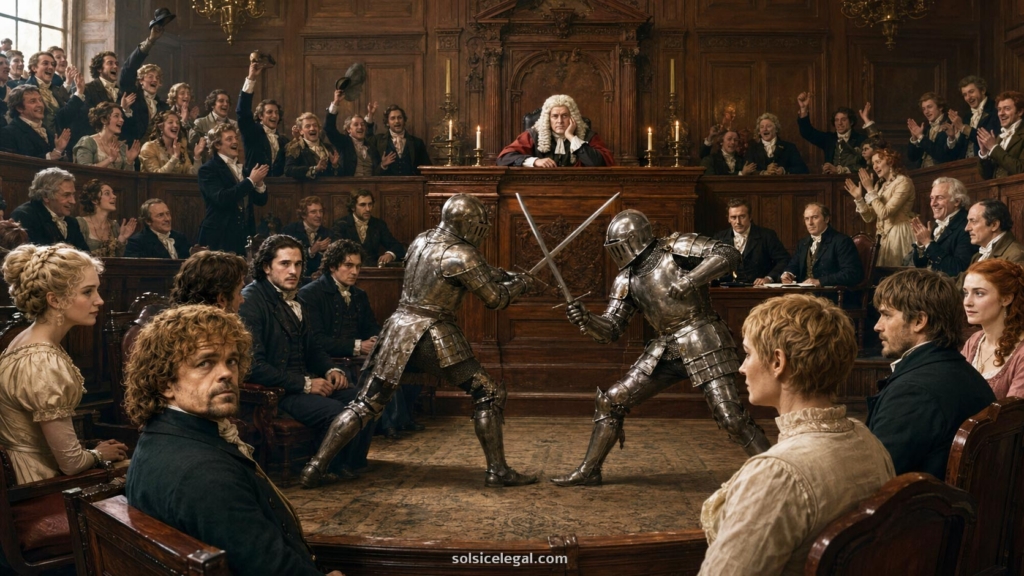
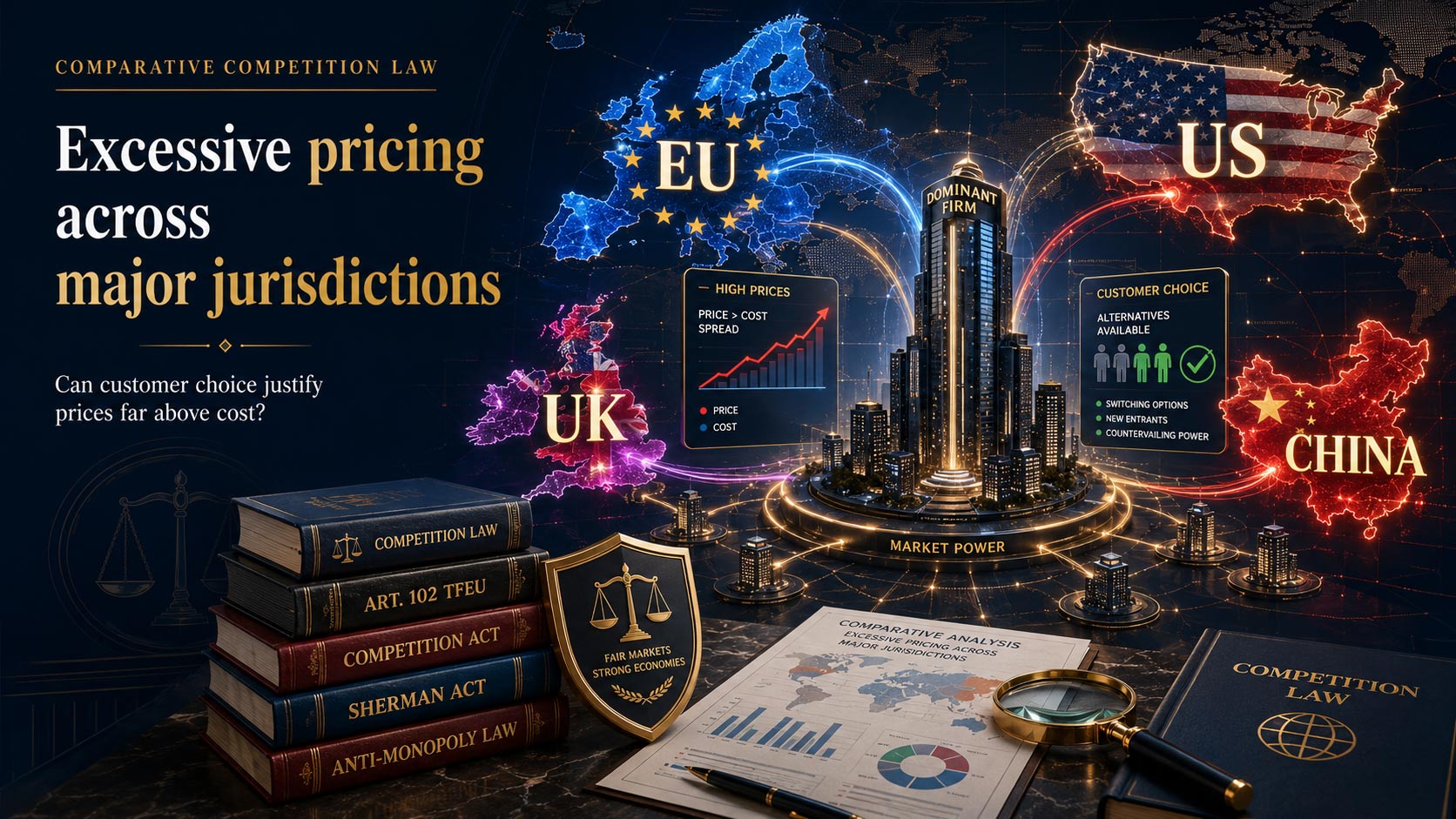
EU, US, UK and Chinese competition law. Excessive pricing in competition law exposes a significant divide between major jurisdictions. The debate tests whether customer choice can protect a dominant undertaking charging prices far above cost from abuse-of-dominance scrutiny.
The issue turns on the difference between nominal alternatives and effective competitive constraint.
Check the analysis, the sources, the verdict, then take the test
The Thesis
“European Union, United States, United Kingdom, China and other major merger-control jurisdictions. : A dominant company may lawfully charge prices far above its costs whenever customers remain free to purchase from another supplier .”
Legal Texts, Case Law, and Concepts Relied Upon
For the European Union, the report principally relies on Article 102(a) TFEU, United Brands v Commission (Case 27/76) and AKKA/LAA (Case C-177/16). These authorities frame excessive pricing, economic value, unfairness and the distinction between dominance and abuse. Hoffmann-La Roche (Case 85/76) is also used in addressing dominance and independence from competitive constraints. Article 102 expressly identifies unfair purchase or selling prices as a potential abuse.
The comparative analysis draws on Section 2 of the Sherman Act, Chapter II of the Competition Act 1998, Flynn Pharma Ltd and Pfizer Inc v CMA [2018] CAT 11, and the report’s cited Article 17 of the PRC Anti-Monopoly Law. It also uses merger-control guidance and the concepts of effective customer switching, market power, exploitative abuse and competitive constraint to compare materially different approaches.
Example of Data Tables Available in the PDF
The PDF contains a jurisdictional legal-data comparison covering the EU, United States, United Kingdom and China, with provisions, excessive-pricing standards and the role attributed to customer choice.
Current or Practical Context
The practical difficulty for internationally active businesses is the absence of a uniform pricing rule: EU and UK legislation expressly encompasses unfair pricing by dominant undertakings, while US Section 2 focuses on monopolisation rather than treating monopoly power or high pricing alone as an infringement. The report places Chinese law closer to the interventionist side of that divide.
You may want to check this debate for a financial perspective https://customers.solsice.com/is-ai-creating-a-structural-repricing-of-memory-and-storage/
Summary
| Description | Details |
|---|---|
| Original report | https://solsicelegal.com/public/debates/european-union-united-states-united-kingdom-china-and-other-b28371835c0e |
| 47 pages | |
| Language | English |
| Scores | Weighted TRUE 2.60 / FALSE 2.62; verdict FALSE; confidence 50% |
| Think tank AIs | openai/gpt-5.6-luna-pro; google/gemini-3.5-flash-lite; moonshotai/kimi-k2.5; accounts/fireworks/models/deepseek-v4-pro; moonshotai/kimi-k2.7-code |
| Clerk-arbitrator | tencent/hy3 |
| Data | Glossary terms: [Premium licence only]; 3 table instances (2 distinct table types) — one Per-Debate Winner Matrix and the jurisdictional excessive-pricing table appearing in the body and again in the Legal Basis and Sources annex. |
| Quiz language | English |
Read the debates, check the sources, understand the verdict, and take the test