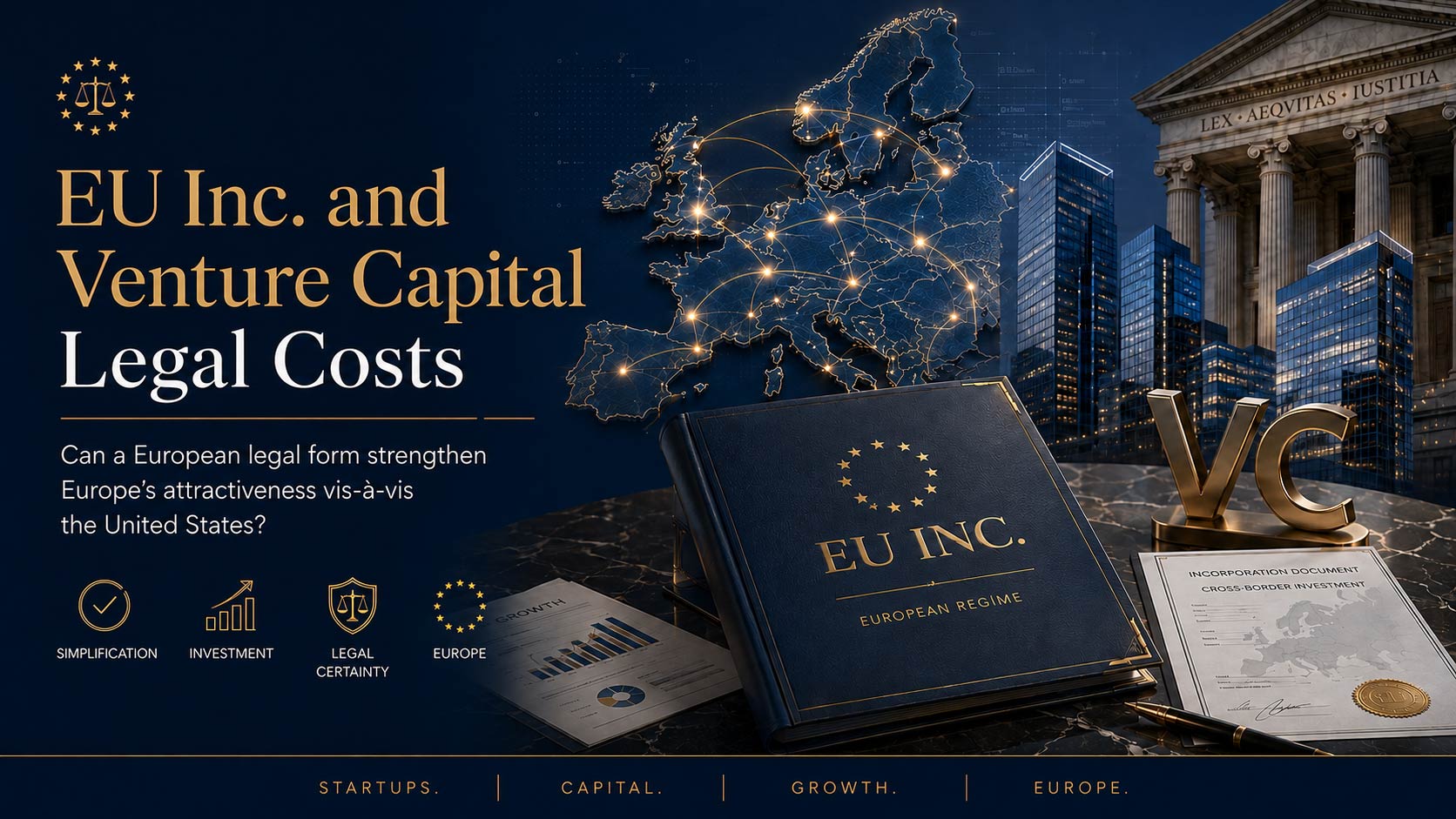
EU Inc venture capital reform is intended to reduce legal fragmentation across Europe. Would a common corporate form be enough to alter the relative attractiveness of the European venture capital market compared with the United States?
View the debate, sources, verdict and take the test :
https://solsicelegal.com/public/debates/l-eu-inc-pourrait-reduire-suffisamment-le-cout-juridique-d-u-f92230e6cd59
The proposition under debate
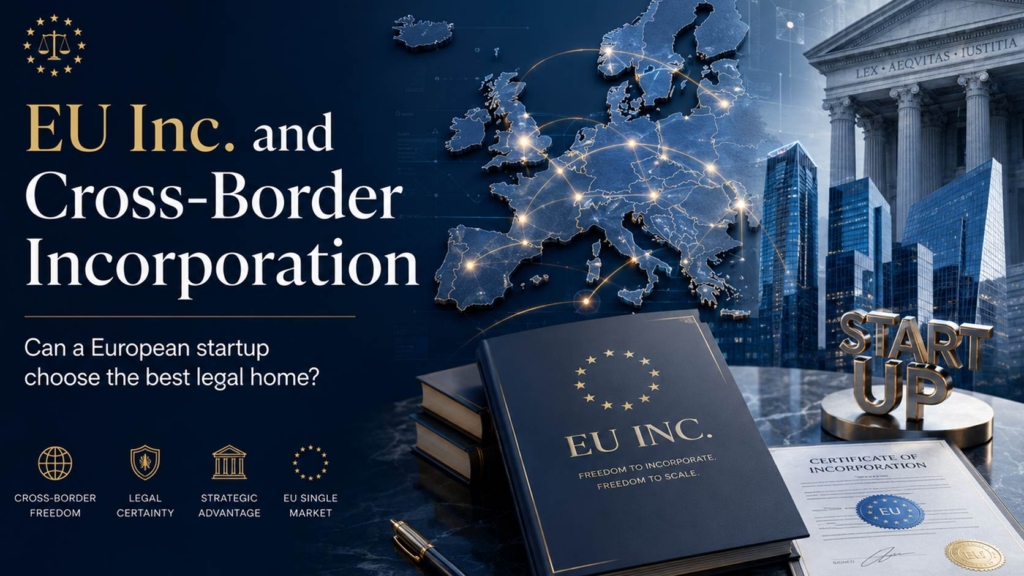
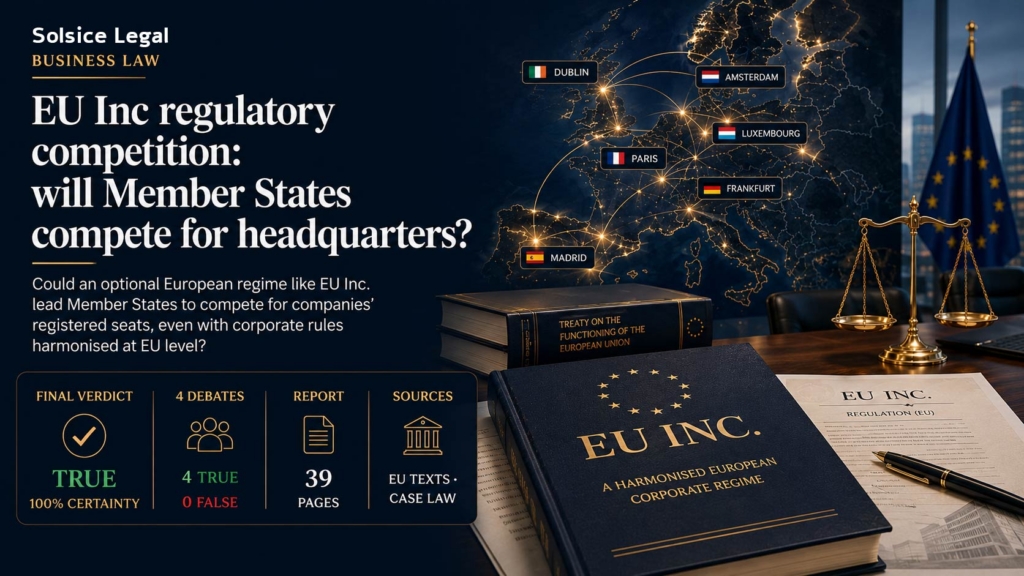
“Is it correct to state that the creation of a unified European legal form known as ‘EU Inc.’ — an optional ‘28th regime’, inspired by the Delaware corporate model in the United States and enabling a company to be incorporated directly at European level without depending upon the national company law of a particular Member State — could, on its own and without accompanying reforms such as tax harmonisation or regulatory simplification, reduce the legal costs associated with cross-border investment in Europe sufficiently to produce a significant change in the relative attractiveness of the European venture capital market compared with the United States?”
The idea was to take the perspective of an US VC. Delaware is attractive because it has become a standard. It gives the thesis an aspect of comparative law, as found in the PDF report.
How the debate unfolded
The TRUE side begins with the cost of fragmentation. A common corporate form could standardise incorporation and financing instruments across Member States, reduce duplicated legal analysis and, over time, produce network effects comparable to those associated with Delaware. The directly applicable nature of an EU regulation and the proposed digital incorporation procedures are the core of that TRUE case.
The FALSE side does not seriously dispute that such efficiencies could arise. Instead, it challenges their significance. Its argument shifts towards matters which a common corporate form would not resolve: taxation, capital markets, exit liquidity, national contracting practices and the absence of a specialised body of case law comparable to that of the Delaware Court of Chancery.
For TRUE , the False argument may be justified for early-stage investments and the standardisation of transaction structures, but considerably less decisive for scale-ups and institutional venture capital.
FALSE uses that concession to maintain that company-law reform, in isolation, is insufficient to produce the wider market effect asserted in the proposition.
Why Delaware remains an important comparator
The report considers the standardisation of financing documentation, share classes, liquidation preferences, anti-dilution provisions, SAFE instruments and stock-option arrangements. It highlights the economic value to investors of operating within a legal framework whose corporate rules, transaction structures and case law are already familiar.
This is however not a legal debate in itself. Familiarity comes with time and new companies registered under the EU Inc. regime.
A debate directly connected to the financing of European growth companies
The European Commission presented the EU Inc proposal on 18 March 2026. Its stated purpose includes creating a harmonised framework available throughout the Union, facilitating the creation and growth of start-ups and scale-ups, and improving their access to investment.
Debate summary
| Description | Details |
|---|---|
| Original report: | https://solsicelegal.com/public/debates/l-eu-inc-pourrait-reduire-suffisamment-le-cout-juridique-d-u-f92230e6cd59 |
| 72 pages | |
| Original language | French |
| Scores | Weighted score: TRUE = 0.00; FALSE = 4.77. Final verdict: FALSE, 85% certainty. 0 TRUE votes and 6 FALSE votes across the six debates |
| Think-tank models | 5 debating models: deepseek/deepseek-v4-pro; anthropic/claude-sonnet-4.6; google/gemini-3.5-flash-lite; xiaomi/mimo-v2.5-pro; deepseek/deepseek-v3.2-exp. The report counts 6 models in total when the chair/arbitrator is included |
| Arbitrator / clerk | minimax/minimax-m3, chairing all six rounds |
| Data | 3 tables: a Delaware/EU Inc comparison across six dimensions of attractiveness; a TRUE/FALSE analysis across five legal and economic dimensions; and a matrix of the six rounds setting out models, scores, tokens, winner and confidence |
| Quiz language | French |
The 72-page report therefore records an unusually consistent outcome: all six rounds ultimately reject the proposition, notwithstanding the acknowledged ability of EU Inc. to reduce certain forms of legal and transactional friction.